Reactive Power, Demystified
For many unfamiliar with electric power, it may come as a surprise to learn that there are three types: apparent, real, and reactive. Reactive power is the part of the grid that sounds made up; and it doesn't help that it is sometimes called 'imaginary power'. It is measured in units most people have never heard of, it does no useful work, and a utility will still reject your project over it. When an electrical engineer starts changing designs and requesting budget updates to accommodate it, it can be hard to accept.
Reactive power has a reputation for being difficult to understand, and it does not deserve it. This post builds it up from the split between real and reactive, then the magnetic field that causes the split, then the hardware that deals with it. Another one in the Demystified series.
REAL AND REACTIVE POWER
On DC, power has one meaning: volts times amps, and every watt turns into light, heat, or motion. AC is different because nothing sits still. Voltage swings from positive peak to negative peak and back, sixty times a second in North America and fifty across most of the rest of the world, and current swings along with it. Multiply the two together at each instant, and the result splits into two parts that behave completely differently.
Real power is the part that arrives and stays. Energy leaves the source, reaches the load, and turns into something: torque, heat, light, motion. It never comes back. This is the power that does work, the power the meter bills you for, and the power a plant's nameplate rating describes. It is measured in watts, and at our scale megawatts.
Reactive power is the part that arrives and leaves again. Energy goes out to the load, is held there for about four milliseconds, and returns to the source. Averaged over a full cycle the net is exactly zero: nothing was consumed and no work was done. It is measured in volt-amperes reactive, written VAR, and at our scale MVAR.
The second one sounds pointless. Why would a grid spend anything to move energy that comes straight back? Because some machines cannot do their job without borrowing it first.
Compare two things plugged into the same outlet.
An electric heater is a length of resistance wire, and it is honest about what it does. Current goes in, heat comes out, all of it. Nothing is held back and nothing returns, so every amp it draws is real power.
An induction motor cannot work that way. Before it can produce any torque at all it has to build a magnetic field, because the field is what physically pushes the rotor around. It builds that field with inductors, which are nothing more exotic than coils of wire: wind a wire into a coil, run current through it, and a magnetic field forms. Building that field takes energy, and the energy is stored in the field the way energy is stored in a compressed spring. Let the current fall and the field collapses, and like a spring released it pushes that stored energy back out into the circuit.
On DC you pay for that once. Energize the motor, the field builds, and then it sits there costing nothing more while the current holds steady.
On AC the field never gets to sit. Current rises from zero to a peak, falls back to zero, reverses, peaks the other way, and returns, sixty times over every second. The field follows it the whole way: build, collapse, build in the other direction, collapse. That is two complete rounds per cycle, so at 60 Hz the spring is compressed and released 120 times a second, and the energy for every one of those rounds travels down the wire from the generator and back again.
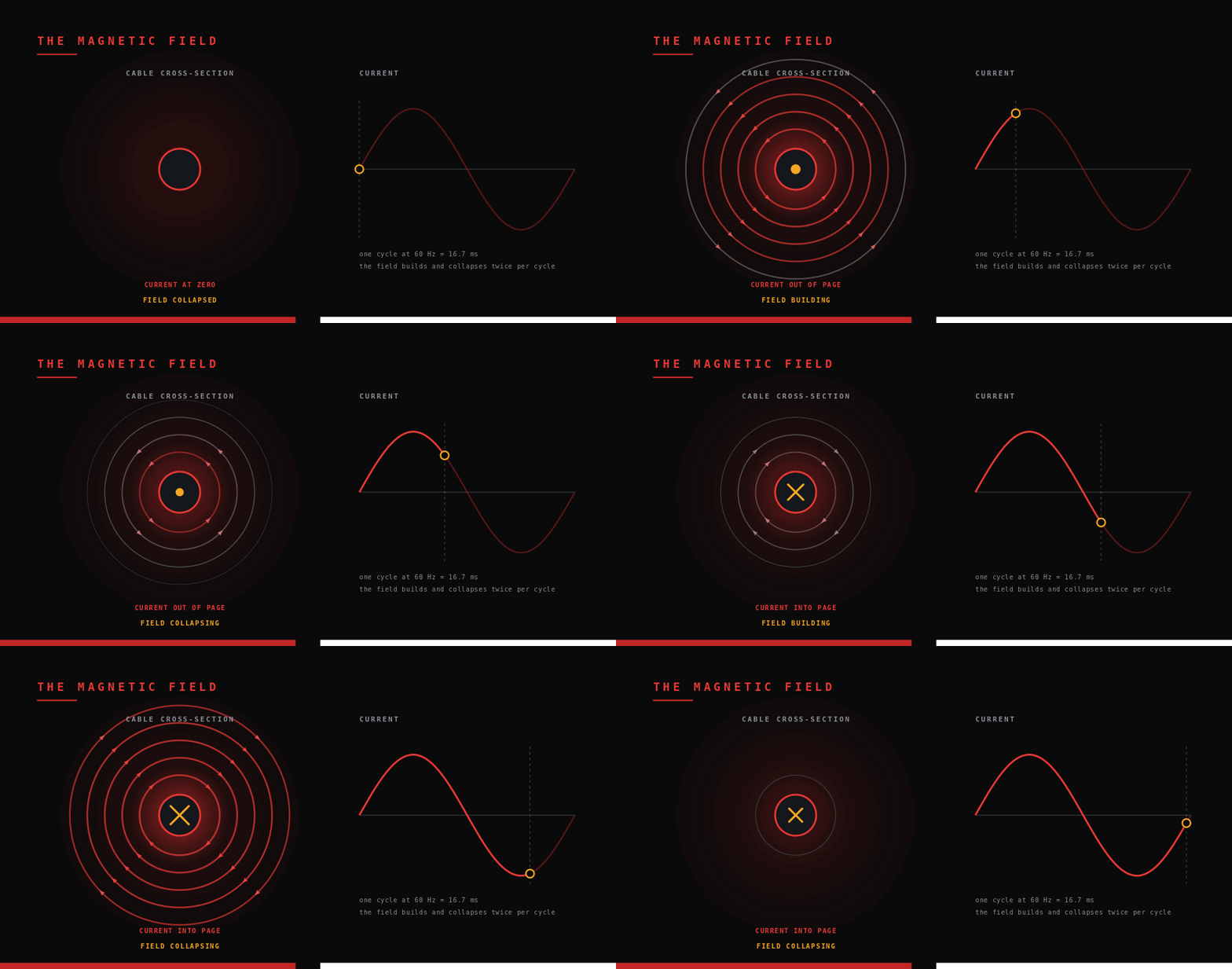
That round trip is reactive power. It is not waste and it is not optional. Without it no motor turns and no transformer works, because the magnetic field is how those machines function at all.
The same thing happens on a smaller scale around the cable itself. Any conductor carrying current has a magnetic field around it, which is why a long transmission line absorbs some reactive power on its own account, simply by being long.
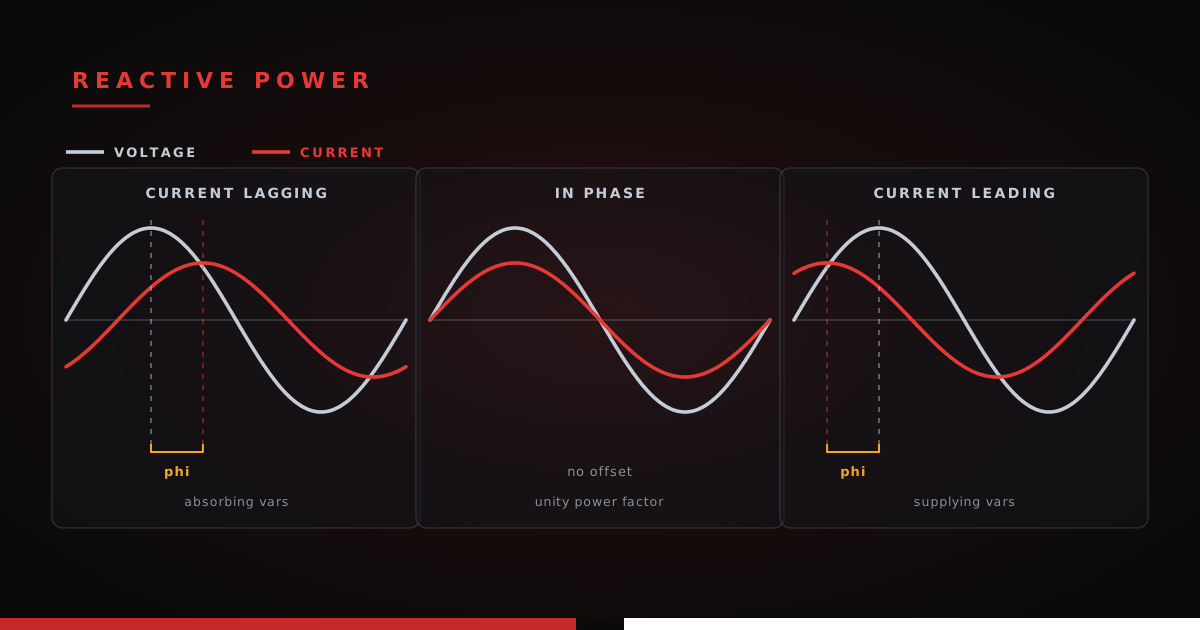
It also leaves a fingerprint you can measure. Building a magnetic field opposes the very change in current that creates it, so in anything with an inductor in it the current runs slightly behind the voltage driving it. The size of that lag is what every power factor number is really describing.
Because real and reactive power sit ninety degrees apart, they do not add like ordinary numbers. They add like the legs of a right triangle, and the hypotenuse is apparent power, the total the conductors and transformers actually have to carry:
S² = P² + Q²
The ratio of the useful part to the total is the power factor, P divided by S. A plant running at 0.95 power factor is delivering 95% of what it is carrying as real power.
REACTIVE POWER DEVICES
Since inductors constantly borrow reactive power, it has to come from somewhere. On a solar or storage project, three things supply it or soak it up.
Capacitors are the mirror image of inductors. An inductor stores energy in a magnetic field; a capacitor stores it in an electric field between two plates. The useful part is the timing, because the two fill and empty on opposite halves of the cycle. The moment an inductor's field collapses and dumps its energy, the capacitor is empty and ready to take it, and a quarter cycle later it hands it straight back. Put the two on the same bus, sized to match, and the energy simply shuttles between them and never travels back to the generator at all.
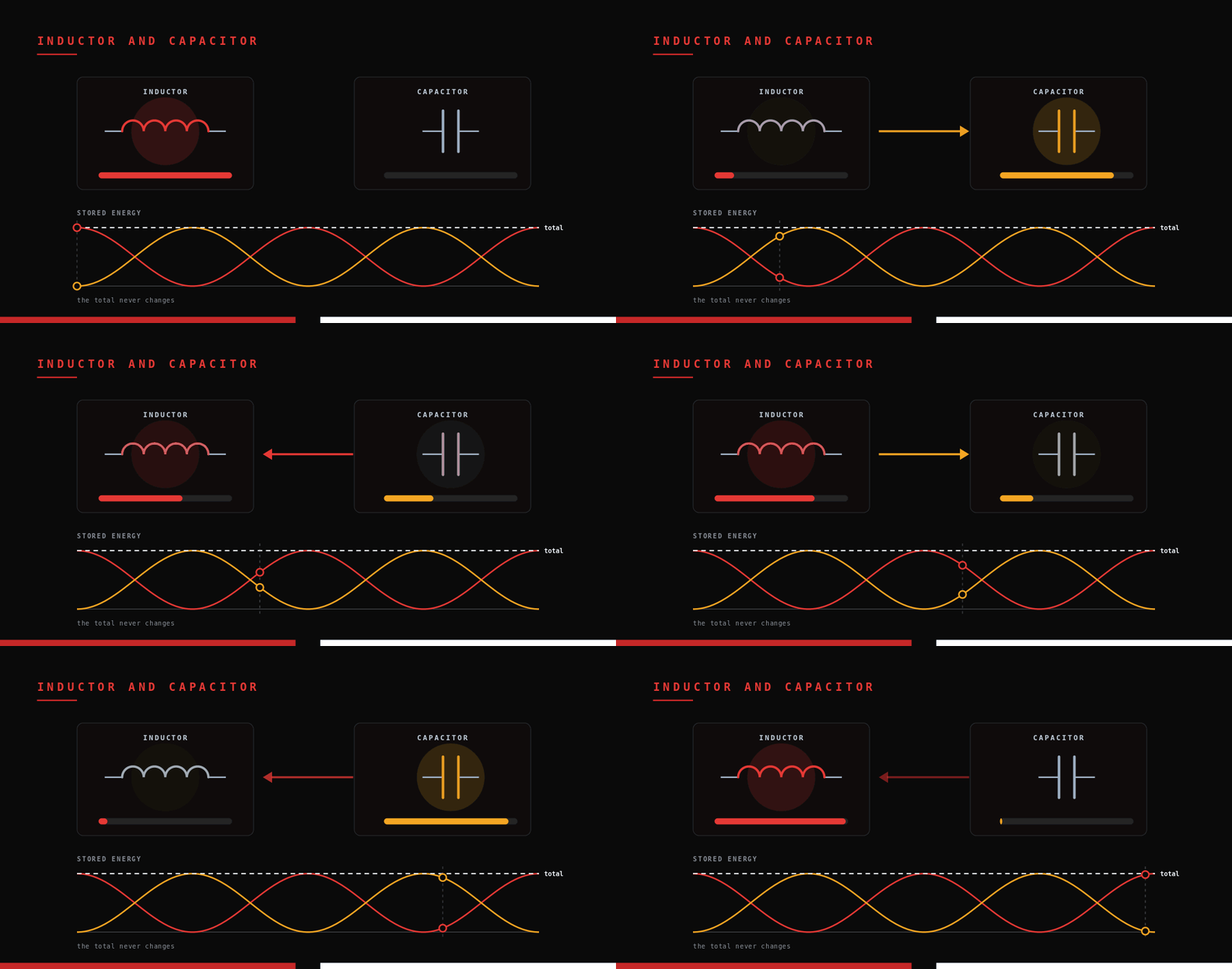
The two gauges never read the same thing at the same moment, and they always add to the same total. That is the whole trick: the inductor still gets everything it needs, and the generator never has to send it.
That is what a shunt capacitor bank does, and it is the cheapest way to supply vars, which is why they sit in so many substations. Their weakness is that output falls with the square of voltage, so a bank rated 10 MVAR at normal voltage delivers only about 8.1 MVAR when voltage sags 10%. It goes weak exactly when you need it.
Shunt reactors are the opposite device for the opposite problem. They are inductors installed on purpose to absorb vars, used where a long, lightly loaded line generates more reactive power through its own capacitance than the system wants, pushing voltage too high.
Inverters are the one that matters most on a renewable project, because they do the job in software. An inverter builds its own output current waveform, so it can place that current at whatever angle it likes relative to the grid voltage: shift one way to supply vars, the other way to absorb them. No extra hardware and no moving parts. The catch is that real and reactive power share one fixed MVA rating, so reactive headroom shrinks as real output climbs. On a bright afternoon at full output, the plant has the least var capability it will ever have.
WHY IT MATTERS
If reactive power comes back every cycle, it ought to be free. It is not, for two reasons, and both are physical rather than accounting.
The first is that the current is real the whole time it is flowing. Reactive current moves through the same copper and aluminum as real current, and the conductor cannot tell them apart. It heats up on the total, it uses up its rated capacity on the total, and it takes up room in the transformer on the total. A feeder carrying 100 A of real current and 33 A of reactive current is carrying 105 A, and has to be sized for 105 A.
The wording matters here. Reactive power does not consume current; the reactive current is the reactive power. A load that needs vars draws an extra slug of current that happens to be out of step with the voltage, and everything that current passes through has to be built for the total. That is why apparent power, not real power, sets equipment ratings, and why transformers are rated in MVA rather than MW.
The second reason is distance. Vars travel perfectly well, but you pay for every mile: the reactive current heats the line the entire way, and the line's own magnetic field absorbs part of what you sent, so the further you ship vars the less arrives and the more voltage sags en route. That is why the fix is local. A capacitor bank next to the load takes the reactive current off everything upstream of it, while the conductors between the bank and the load carry it exactly as before. Position matters as much as size.
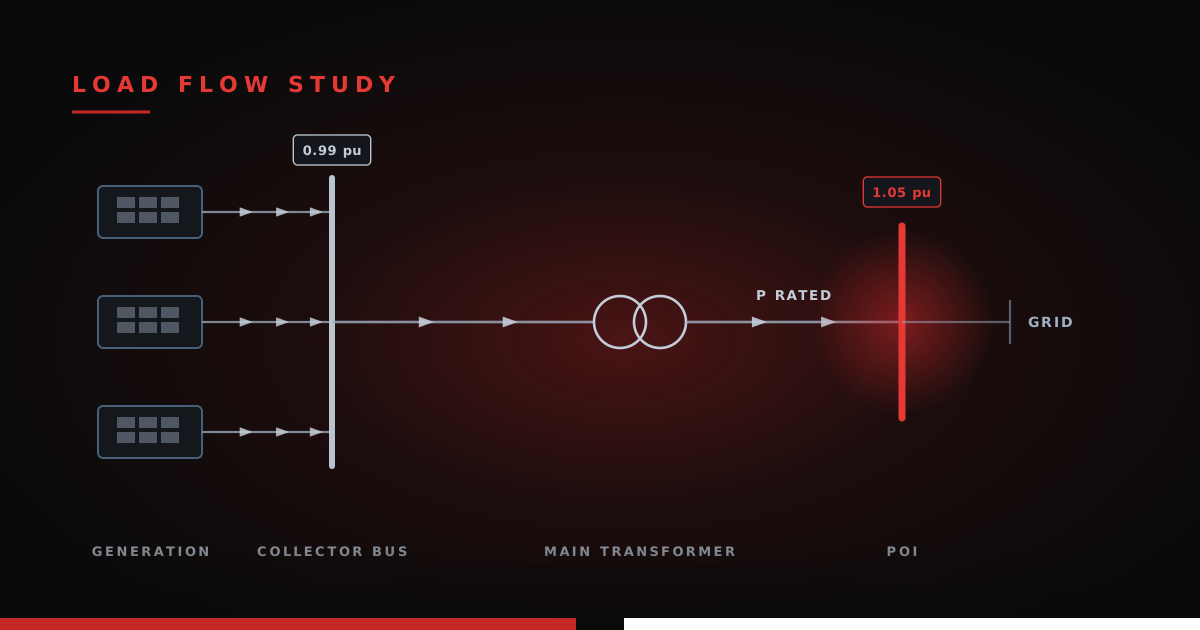
Which is how a physics question about magnetic fields turns into a line item on a project. Every plant connecting to the system is asked to hold up its own corner of the grid, and proving it can is what the load flow study does. Pass, and the design as drawn works. Fail, and you are buying capacitor banks or reactors, both of which exist to serve a magnetic field somewhere on the system that has to be built and collapsed 120 times a second.